What AI citation visibility means
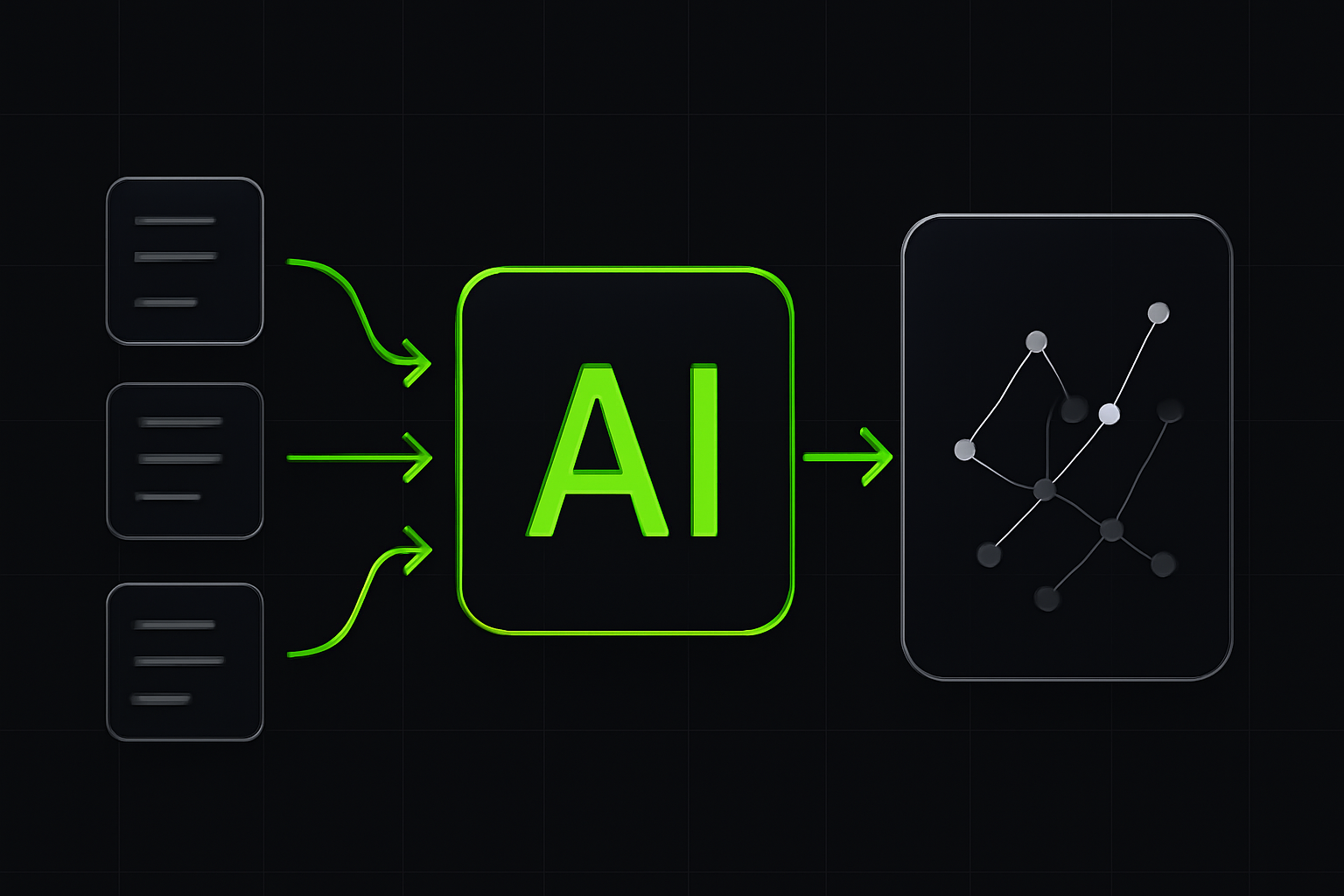
AI citation visibility measures whether AI answer engines such as ChatGPT, Perplexity, Gemini, and AI search experiences mention your brand when users ask relevant buying or research questions. It matters because buyers increasingly receive a synthesized answer instead of a list of blue links. The brand that appears inside that answer starts the buying conversation with trust already borrowed from the model.
What most people get wrong
Most teams treat AI visibility as a prompt trick. They ask, “How do we get ChatGPT to mention us?” The better question is, “What evidence would make a careful answer engine choose us?”
Models do not cite brands because a company wants exposure. They cite brands when the available evidence makes the brand relevant, well-described, and trustworthy for the user’s question. That evidence can live on your own site, but it often lives elsewhere: review pages, comparison articles, documentation, Reddit threads, partner directories, analyst pages, and category explainers.
AI citation visibility vs SEO
| Signal | Traditional SEO | AI citation visibility |
|---|---|---|
| Primary goal | Rank a page in search results | Be mentioned or cited inside an answer |
| Unit of competition | URL vs URL | Brand/entity vs alternatives |
| Typical evidence | Content relevance, links, technical quality | Entity clarity, trusted source presence, third-party corroboration |
| Failure mode | You do not rank | You rank, but the AI answer recommends someone else |
The first-principles model
An answer engine has to compress a messy web into a useful response. For a brand to appear, three things usually need to be true:
- Relevance: the system can connect the brand to the user’s category, problem, and use case.
- Evidence: multiple accessible sources support why the brand belongs in the answer.
- Confidence: the system can describe the brand clearly without relying on unsupported claims.
This is why vague homepages underperform. If your site says you are “the easiest platform to grow faster,” an answer engine has little concrete evidence to use. If your site says you track AI citation gaps across ChatGPT prompts, compare competitor mentions, and identify cited third-party sources, the entity is easier to understand.
A practical workflow to improve AI mentions
1. Build your prompt set
Start with buyer questions, not keywords. Include category questions, comparison questions, pain-point questions, and purchase-stage questions. Example: “What are the best tools to track whether ChatGPT recommends my company?”
2. Record who appears
Run the prompts across the answer engines your customers use. Record mentioned brands, linked sources, wording, and whether the system explains why each brand is relevant.
3. Extract citation gaps
A citation gap is a source that helps a competitor appear while your brand is missing. It might be a listicle, review page, forum thread, partner page, or documentation page.
4. Close the gaps with useful evidence
Do not spam every source. Prioritize pages where your brand is genuinely relevant. Add missing owned content, improve documentation, pitch authoritative comparisons, and participate where community norms allow.
5. Make owned pages extractable
Use plain language, semantic HTML, direct definitions, comparison tables, FAQs, and schema. Google’s documentation on AI features and your website explains that normal search controls such as snippets and previews can affect how content appears across search experiences. Google also documents robots controls such as robots meta tags.
Checklist: make a page easier to cite
- Answer the main question in the first 100 words.
- Define the core term in one concise paragraph.
- Use specific category language instead of broad marketing claims.
- Add comparison tables when users are choosing between approaches.
- Include FAQs that match natural-language AI prompts.
- Use external citations only for authoritative, original sources.
- Keep claims verifiable and avoid invented statistics.
- Make crawlers welcome if you want AI search systems to discover the page. OpenAI documents its crawler and user-agent controls in OpenAI bots documentation.
Where Covable fits
You can do this manually in a spreadsheet, but it gets messy quickly. Covable is built for the measurement layer: prompts, competitor mentions, cited sources, citation gaps, and the work needed to close those gaps. The point is not to “hack” AI systems. The point is to understand where buyers are being routed and make your brand visible where it genuinely belongs.
FAQ
- What is AI citation visibility?
- AI citation visibility is the rate at which AI answer engines mention, cite, or recommend your brand for relevant user questions.
- Is AI citation visibility the same as SEO?
- No. SEO focuses on search result rankings. AI citation visibility focuses on whether your brand appears inside generated answers.
- Why does ChatGPT mention competitors but not us?
- Usually because competitors are better represented in trusted sources, clearer owned pages, or third-party comparisons that answer engines can use.
- Can I pay to be cited in AI answers?
- You cannot reliably buy organic AI citations. Paid placements may exist in some products, but organic answer visibility depends on evidence and retrieval.
- What is a citation gap?
- A citation gap is a trusted source that supports competitor visibility while your brand is absent or poorly described.
- Do backlinks matter for AI visibility?
- Backlinks can matter indirectly because they help authoritative pages get discovered and trusted, but entity clarity and third-party evidence are also critical.
- Should we block AI crawlers?
- If you want AI search systems to discover public marketing content, blocking all AI crawlers can work against visibility. Review each crawler and policy deliberately.
- What content format works best?
- Direct answers, comparisons, definitions, FAQs, original examples, and clear product-category pages are easier for answer systems to extract.
- How often should we measure AI citations?
- Weekly is a practical starting point for most teams. Daily tracking is useful during launches or fast-moving competitive pushes.
- How long does improvement take?
- Owned-page clarity can improve quickly, but third-party source gaps and model/search refresh cycles take longer. Treat it as a compounding visibility program.
Key takeaways
- AI citation visibility measures whether your brand appears in generated answers.
- The main constraint is evidence, not prompt wording.
- Traditional SEO and AI visibility overlap, but they are not the same job.
- The best workflow is prompt tracking, competitor extraction, source-gap analysis, and evidence creation.
- Covable helps operationalize that measurement layer without turning it into guesswork.