What “citeable” means for a SaaS page
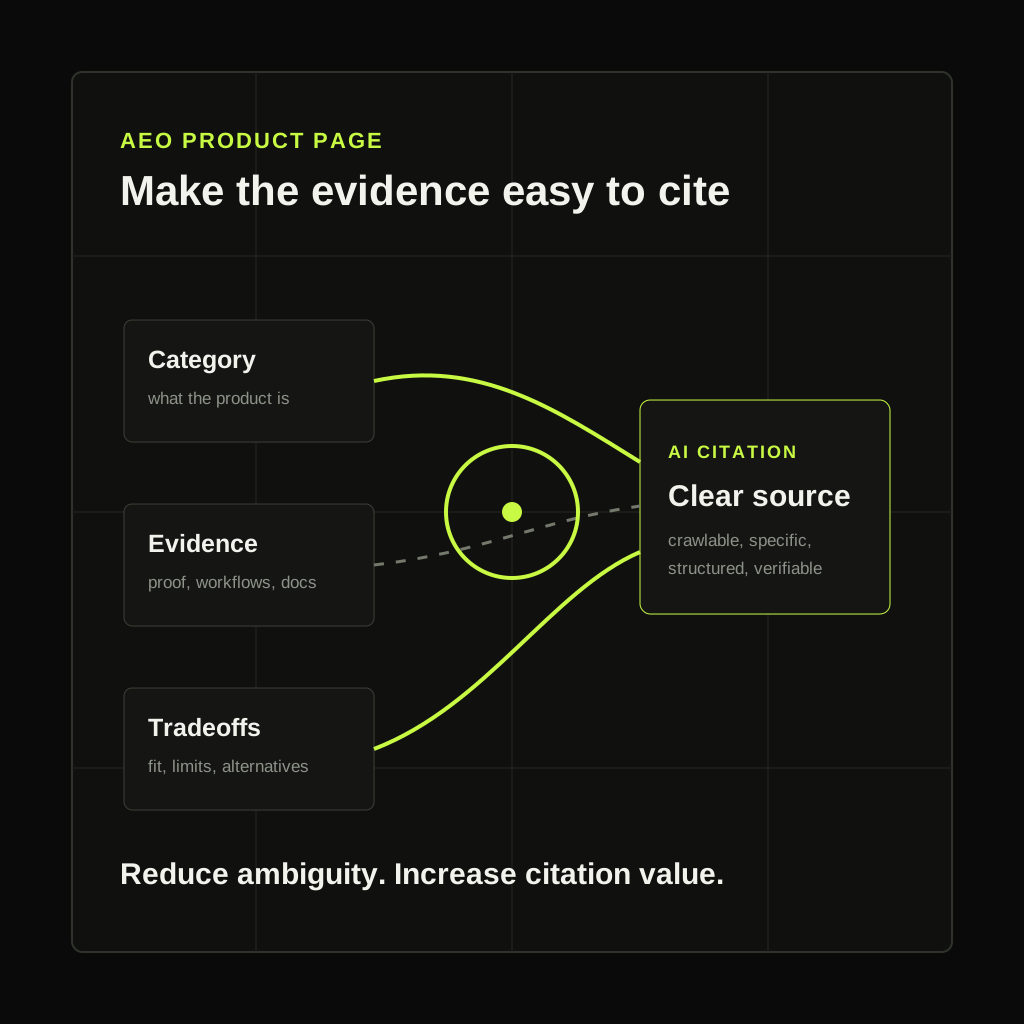
A citeable page is not merely indexable. It is a page an answer engine can use as evidence when responding to a specific question. For SaaS, that usually means the page explains the product, the problem, the audience, the workflow, and the tradeoffs without forcing the reader to infer the basics.
Google’s documentation for AI features and your website points back to familiar fundamentals: crawlable pages, eligible snippets, and content that search systems can understand. OpenAI’s bot documentation is a separate reminder that access controls matter for AI search eligibility. Access is the floor. Usefulness is the ceiling.
What most people get wrong
Most SaaS pages are written to sound polished, not to be cited. They use broad claims such as “all-in-one platform,” “smarter workflows,” or “modern growth stack” while hiding the actual category, customer, workflow, and constraints. That may look acceptable in a hero section. It is weak evidence for an answer engine.
The other mistake is treating schema as the strategy. Structured data can clarify meaning, but it cannot compensate for a page that never answers the buyer’s question.
The citeable SaaS product page framework
1. Name the category in the first screen
Answer engines need entity clarity. A product page should say whether the tool is an AI visibility platform, CRM, workflow automation tool, billing system, support desk, analytics product, or something else. Avoid making the category a mystery.
For Covable, a clear category statement would be: “Covable helps teams monitor how AI systems mention, cite, and recommend their brand.” That gives both humans and machines a usable definition.
2. Define the buyer and the job
State who the product is for and what job it helps them complete. “For marketing teams” is weaker than “for SaaS marketing teams that need to measure ChatGPT brand mentions, competitor citations, and AI answer source gaps.” The second version contains actual retrieval hooks.
3. Put direct answers near the questions they answer
Use human headings that match buyer intent: what the product does, when to use it, how it works, what it monitors, how it differs from alternatives, what data it needs, and what output the user receives. This creates extractable answer blocks without turning the page into a keyword wall.
4. Explain tradeoffs honestly
A citeable page should say who the product is not for. That sounds counterintuitive, but answer engines often need to compare options. If your page gives only praise, third-party sources will carry the nuance instead.
5. Add evidence that can be verified
Useful evidence includes product screenshots, real workflows, integrations, documentation, customer examples, benchmarks you can support, methodology notes, and maintained comparison pages. Do not invent numbers. If a claim needs data and you do not have it, write the claim more narrowly.
Use schema to clarify, not decorate
Schema should match visible content. The SoftwareApplication schema can describe software category, operating system, offers, and ratings when those details are accurate and visible. Google’s software app structured data documentation explains eligibility requirements for app-related search features.
For SaaS pages, accurate Organization, Product or SoftwareApplication, FAQPage, and BreadcrumbList markup can help clarify the page. False or invisible markup is not an AEO tactic. It is technical debt with better punctuation.
Comparison content makes pages easier to cite
| Page element | Weak version | Citeable version |
|---|---|---|
| Category | AI-powered platform | AI visibility monitoring platform for ChatGPT, Perplexity, Gemini, and Google AI answers |
| Audience | Growing teams | SaaS marketing and content teams tracking brand mentions and competitor citations |
| Proof | Trusted by leaders | Shows prompt-level mention rate, cited domains, competitor share, and source gaps |
| Comparison | Better than manual tracking | Explains when spreadsheets work, when monitoring software is needed, and what each misses |
| Pricing | Contact sales | Explains plan logic, usage drivers, team fit, and when a buyer should talk to sales |
Technical checks before asking for citations
- Confirm the page returns a 200 status and is not blocked by robots.txt.
- Use `index, follow` unless there is a clear reason not to.
- Ensure important content is present in rendered HTML, not hidden behind fragile interaction.
- Use a canonical URL that matches the public production page.
- Check that title and meta description describe the actual product category.
- Add descriptive alt text to meaningful product visuals.
- Use structured headings in a logical order.
- Mark up FAQs only when the questions and answers are visible on the page.
- Test crawler access for search and AI bots where relevant.
- Watch whether the page appears in prompts tracked through your ChatGPT brand mention measurement workflow.
Owned pages still need third-party context
A better product page helps, but AI answers often rely on outside evidence. Review pages, community discussions, documentation, partner pages, and comparison articles can all shape recommendations. If competitors are repeatedly supported by sources that omit you, you have an AI citation gap, not just a product-page problem.
Owned pages explain what you claim. Third-party sources help show whether the market agrees. Strong AI visibility usually needs both.
Where Covable fits
Covable helps teams see which prompts mention their brand, which competitors appear, which sources get cited, and where missing-source patterns repeat. That makes product-page work more specific: instead of rewriting every page, teams can improve the pages and evidence that map to real AI answer behavior.
FAQ
- What makes a SaaS product page citeable in AI answers?
- A citeable SaaS product page clearly states what the product does, who it is for, what category it belongs to, what problems it solves, and what evidence supports those claims.
- Can schema markup make AI systems cite my SaaS page?
- Schema markup can clarify page meaning, but it does not guarantee citations. The page still needs crawlable content, useful evidence, and language that directly answers buyer questions.
- Which schema should SaaS product pages use?
- Common options include Organization, SoftwareApplication, Product, FAQPage, and BreadcrumbList where they accurately describe the page content.
- Should SaaS pages include comparison sections?
- Yes, when comparisons are fair and specific. AI answers often need category tradeoffs, alternatives, and best-fit explanations to recommend a product accurately.
- How much content does a citeable SaaS page need?
- Enough to answer the buyer's key questions without hiding important facts behind vague claims. Clarity, evidence, and structure matter more than word count.
- Do testimonials help AI citation visibility?
- Testimonials can help when they are specific, verifiable, and connected to use cases. Generic praise adds little evidence for AI answers or human buyers.
- Should pricing be visible on SaaS product pages?
- Visible pricing or pricing logic helps answer engines and buyers understand fit. If exact pricing is not public, explain packaging, target customer size, and buying motion.
- How do crawler controls affect SaaS product citations?
- If search or AI crawlers cannot access the page, the page is less likely to appear as a source. Robots.txt, meta robots, authentication, and rendering issues should be audited.
- What should a SaaS comparison page avoid?
- Avoid strawman comparisons, unverifiable claims, fake statistics, and pages that mention competitors only to dismiss them. Useful comparisons explain tradeoffs honestly.
- How does Covable help with citeable SaaS pages?
- Covable helps teams see which prompts, competitors, sources, and citation gaps matter, so product pages can be improved around real AI answer behavior.
Key takeaways
- Citeable SaaS pages reduce ambiguity around category, buyer, workflow, and fit.
- Schema helps clarify content but does not replace useful evidence.
- Comparison and pricing context make pages more useful for AI-generated recommendations.
- Crawler access is necessary, but not enough by itself.
- Product-page improvements should be guided by real prompts, citations, and source gaps.